

Not sure whether limewash will make your brick look softly aged or almost completely white? Before and after limewash brick examples can help you picture the change before you pick a finish.
Brick color, texture, lighting, and the amount of limewash applied can all affect the final result. A light coat may leave red, brown, or orange tones visible, while heavier coverage can create a much paler exterior.
In this guide, you’ll see 23 before and after ideas covering different brick colors, home styles, coverage levels, and interior spaces.
You’ll also learn what affects the finished look, how to choose between subtle and fuller coverage, and how limewash compares with paint. Use these examples to find a look that fits your brick and your home.
What Does Limewash Do to Brick?

Limewash changes the color of brick while allowing much of its texture, variation, and character to remain visible. Traditional limewash is made with slaked lime, also called calcium hydroxide, mixed with water.
On suitable porous masonry, the lime hardens through carbonation rather than forming the same type of film as conventional paint.
The final look depends on how the limewash is mixed and applied. A thin application or distressed finish can leave much of the original brick showing, while greater coverage can create a much lighter appearance.
Limewash can also develop a patina as it weathers, so the finished appearance may change over time. This is why two limewashed homes can look very different even when they use similar colors.
The brick itself also matters. Red, brown, yellow, and mixed brick can each produce a different result after limewashing. If you are comparing inspiration photos, pay attention to both the original brick and the amount of coverage in the finished example.
23 Before and After Limewash Brick Ideas
These examples show how brick color, coverage, home style, and surrounding finishes can change the final limewash appearance.
1. Classic Red Brick to Soft White

Red brick can look much softer after a light white limewash. Instead of hiding every brick, the finish tones down strong red and orange colors while leaving the masonry pattern visible.
This approach works well when you want a lighter exterior without making the brick look fully painted.
The amount of original color showing through can also add gentle variation across the wall. Pairing the softer brick with simple trim can make the overall exterior feel balanced without changing its existing character.
2. Dark Brick to a Brighter Exterior

Dark brown or deep red brick can make an exterior feel visually heavy. A lighter limewash can reduce that effect by adding a soft, pale layer over the existing color.
The result can make the facade appear brighter while keeping the uneven texture of brick visible. A partial wash may work well when you still want the darker brick to show through.
For more coverage, additional coats can create a lighter appearance. Dark windows, doors, or trim can provide contrast against the newly softened brick.
3. Orange Brick to Warm White

Orange brick can have a strong warm tone that dominates an exterior. A warm white limewash can soften that color without making the house appear cold or stark.
Some of the orange may remain visible through the finish, creating natural variation across the wall. This look can work especially well with wood doors, warm-toned roofs, or natural stone details.
If the goal is a gentle change rather than a major color shift, start with lighter coverage. The original orange brick can then continue contributing warmth to the finished exterior.
4. Yellow Brick to a Muted Neutral

Yellow brick can sometimes create a stronger color statement than homeowners expect. Limewash can reduce that yellow appearance and move the exterior toward a softer neutral tone.
Because limewash does not have to cover every brick completely, small areas of the original color can remain visible. This keeps the wall from looking completely flat.
A muted finish can work with white trim, natural wood, gray roofing, or darker accents. Before choosing the final look, test the limewash on a small section because the existing yellow tones will affect the finished color.
5. Brown Brick to Soft Greige
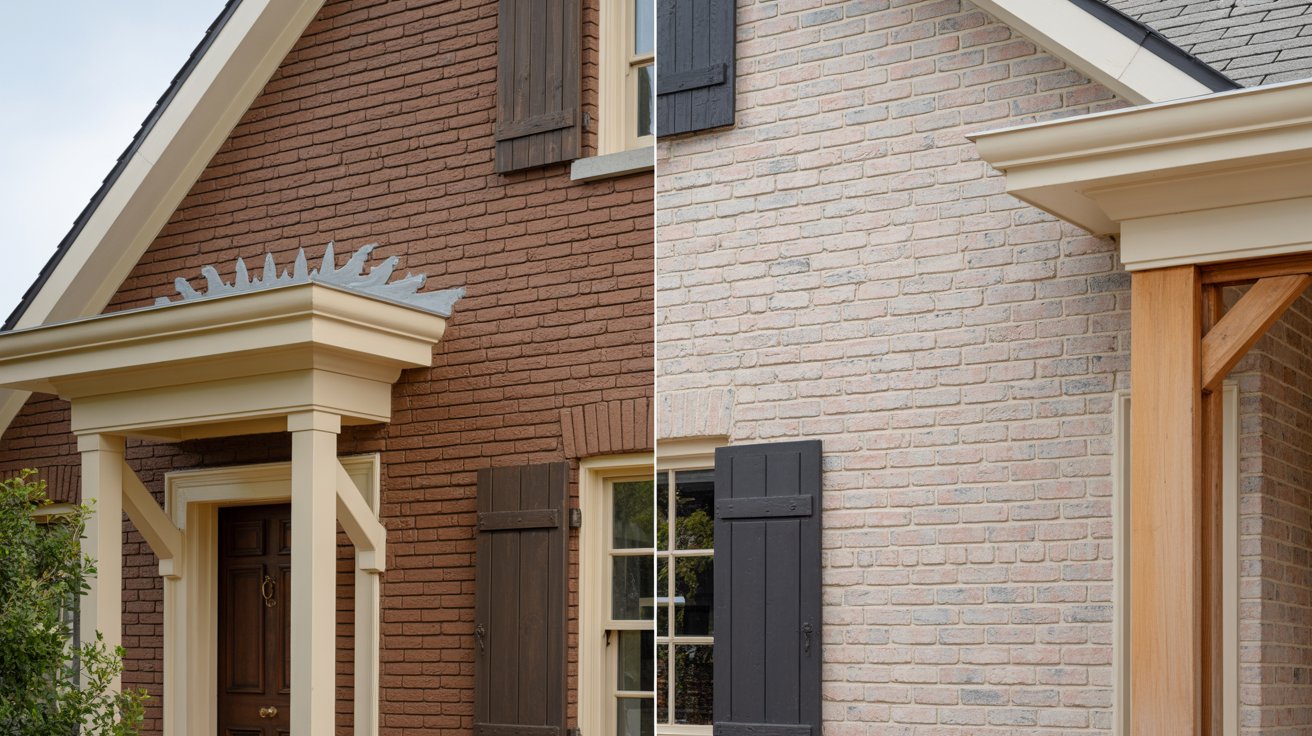
Brown brick does not always need to become white to feel refreshed. A softer limewash can reduce the depth of the brown while leaving enough original color to create a warm greige appearance.
This option suits homeowners who want less contrast but still want the brick texture to remain part of the design. The final tone will depend on the original brick and limewash mixture.
Natural wood, cream trim, and darker accents can complement this softer finish without making the exterior feel overly bright.
6. Heavy Limewash for a Painted-Brick Look

A heavier limewash application can create a much more uniform exterior while still giving the brick a mineral, textured appearance.
Greater coverage can make the facade appear closer to painted brick, but limewash and opaque masonry paint are not the same finish. A product such as a mineral-based masonry paint is designed for a more consistent, covered result.
However, limewash can still show subtle differences between individual bricks and mortar lines. This approach may suit older brick that has several colors or marks you want to visually reduce. Always test the desired coverage before treating the entire wall.
7. Lightly Distressed Limewash

A lightly distressed limewash leaves more of the original brick exposed, creating a relaxed and varied appearance. Distressing or washing off part of the limewash controls how much of the brick remains visible.
Red, brown, or orange tones can remain visible between pale areas of limewash. This style works when you want the finish to look aged rather than completely uniform.
Application technique plays an important role because uneven coverage can change the final appearance from one area to another. It can work especially well on older masonry where natural texture already exists.
8. Classic Tudor Limewash

Limewashed brick can complement the strong architectural details found on Tudor-style homes. A soft white or muted limewash can reduce the visual weight of brick while allowing timber, stone, rooflines, and decorative details to stand out.
The amount of coverage can be adjusted depending on how much of the original brick color you want to retain. A lighter wash can preserve more character, while heavier coverage creates a brighter facade.
Look at the full exterior before choosing a finish, since the roof and timber colors can affect how the limewashed brick appears.
9. Colonial Brick Exterior

Colonial-style homes often have brick facades with strong architectural details such as columns, shutters, trim, and formal entryways. A lighter limewash can make these features stand out by reducing the intensity of the brick.
A soft white finish can create a classic appearance, while a warmer neutral can keep the exterior from feeling too bright. The right coverage depends on the original brick color.
If the brick has several strong tones, a heavier application may create a more consistent backdrop for shutters, doors, and other exterior details.
10. Ranch Home Brick Makeover

A ranch home can take on a different appearance when its brick is softened with limewash. Because ranch exteriors are often low and wide, a lighter facade can make the home feel cleaner without changing its basic structure.
A lightly applied finish keeps the brick pattern visible, while greater coverage creates a more updated appearance. Dark trim, simple landscaping, or a natural wood door can add contrast.
Before choosing the finish, consider the roof and existing exterior materials because they will influence how the new brick color looks.
11. Farmhouse-Style Limewashed Brick

Farmhouse-style exteriors often work well with soft whites and natural materials. Limewash can brighten the brick while preserving the uneven texture that helps create a relaxed appearance.
A lightly washed finish allows more brick color to show, while additional coverage creates a cleaner white backdrop. Wood doors, natural stone, black accents, and simple landscaping can work well beside the finish.
Avoid choosing the whitest option simply because it looks appealing in a photo. Your existing brick color will influence whether the finished surface looks warm, neutral, or slightly gray.
12. Modern Home With Limewashed Brick
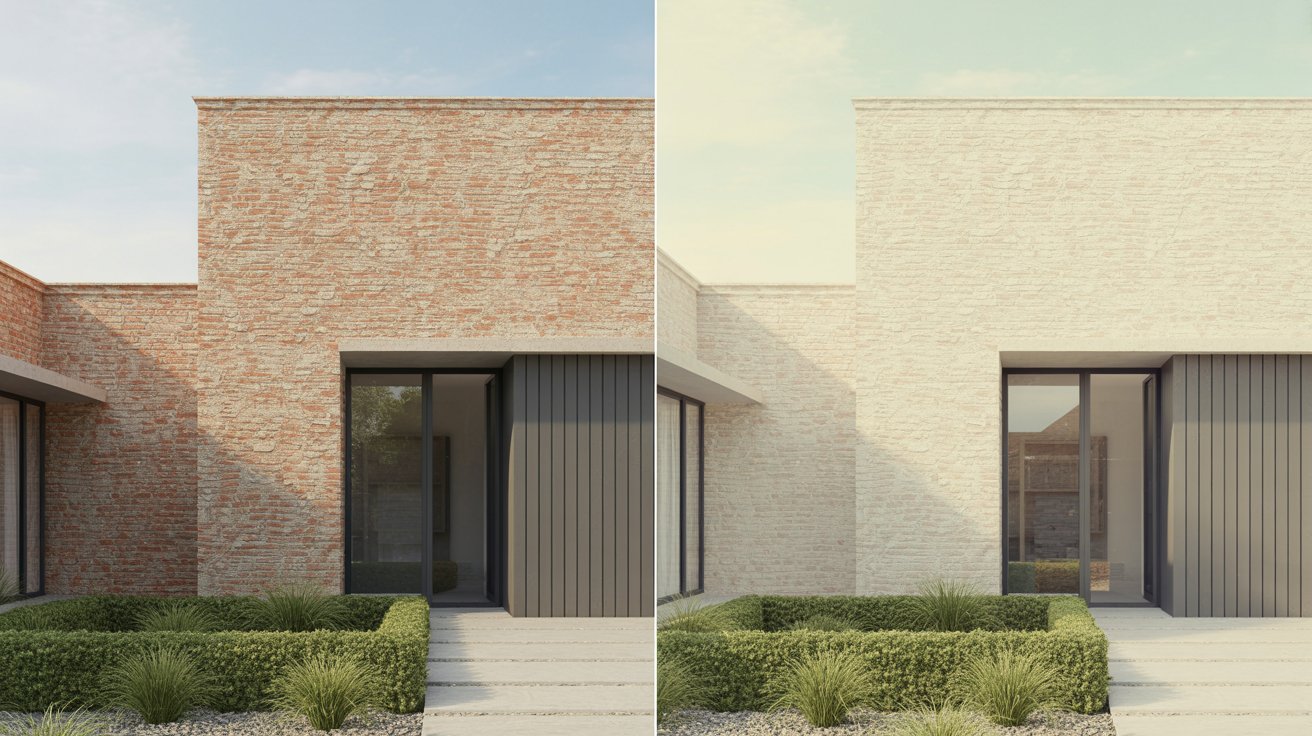
Limewash can soften brick on a modern home without removing the texture that makes masonry distinctive.
A pale neutral finish can work with clean architectural lines, large windows, and simple landscaping. The amount of coverage can determine whether the brick remains a noticeable feature or becomes a quieter background element.
Dark frames and trim can create clear contrast against a light limewashed wall. For modern exteriors, a more controlled finish may suit the architecture, but slight variation can keep the brick from appearing completely flat.
13. Limewash With Black Windows and Trim

Light limewashed brick paired with black windows or trim creates a strong contrast that can change the appearance of an entire facade.
The pale brick provides a softer background, while dark details define windows, doors, and architectural lines. A full white limewash can create a sharper contrast, while a thinner application produces a more relaxed look.
This combination can work across several home styles, but the surrounding roof and landscaping also matter. If your existing brick has warm undertones, a warmer limewash may help the black accents feel less severe.
14. Limewashed Brick With a Wood Door

A natural wood door can add warmth to a light limewashed brick exterior. The pale wall creates a simple background, allowing the door's grain and color to become a focal point.
This combination can work with both lightly washed and more covered finishes. If the limewash is very cool, a warm wood tone can create useful balance. With warmer limewash, the exterior may feel more connected to the natural materials around it.
Look at the brick, door, roof, and trim together instead of choosing the limewash color on its own.
15. Mixed Brick and Stone Exterior
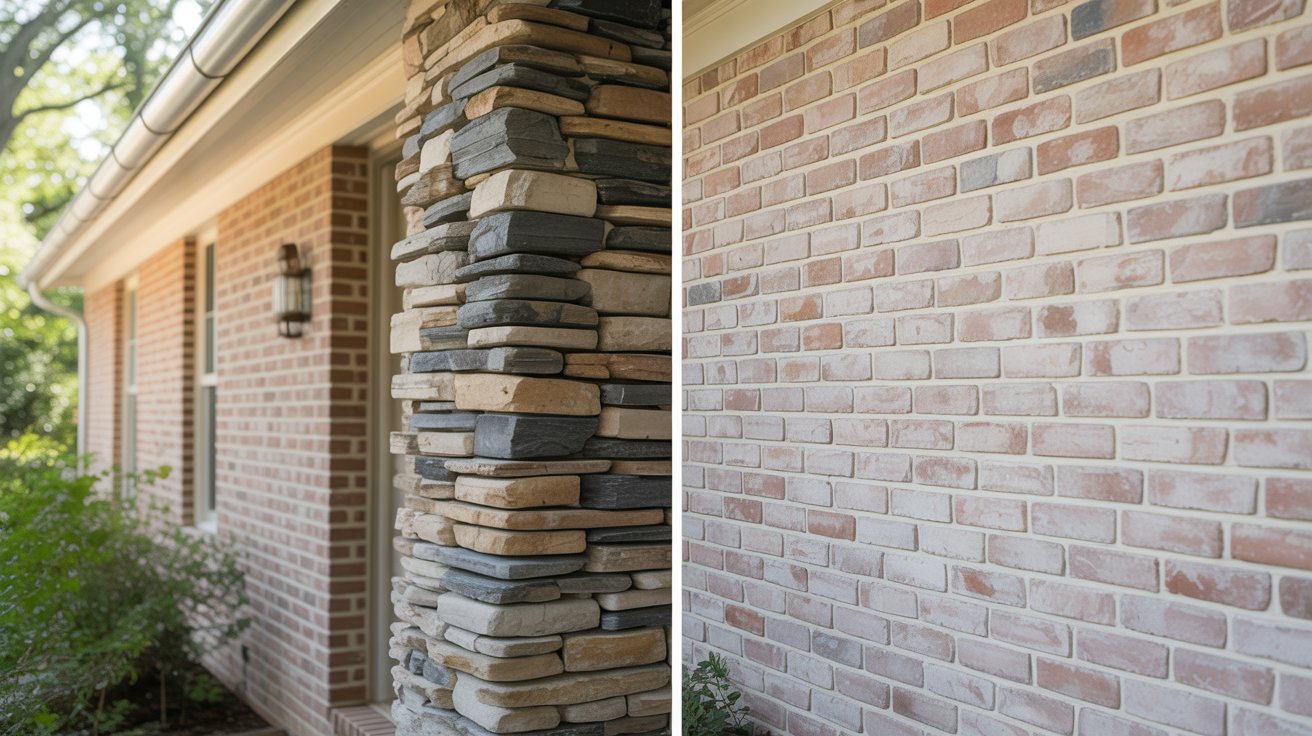
Homes with both brick and stone can sometimes look visually disconnected because the materials have different colors and textures.
A carefully chosen limewash can help bring them closer together by softening the brick toward a tone that works with the stone. The goal is not necessarily to make both materials identical. Instead, choose a finish that allows their colors to relate.
Test the limewash beside the stone because the stone's undertones can change how the brick appears. Natural variation can also help both materials retain their individual character.
16. Limewashed Brick Around the Entryway

You do not always need to limewash an entire exterior to create a noticeable change. Applying the finish around an entryway can draw attention toward the front door, porch, or surrounding architectural details.
A lighter area can provide contrast against darker brick elsewhere on the home. This approach may suit homeowners who want a smaller visual change or want to test the finish before covering more masonry.
Keep the surrounding trim and door color in mind. The entryway should feel connected to the rest of the facade rather than looking like a separate feature.
17. Brick Fireplace Before and After

Limewash can also change the appearance of an interior brick fireplace. A darker or heavily patterned fireplace can become a softer focal point when a pale limewash is applied.
Leaving some brick visible preserves the texture and gives the surface more variation than ordinary paint. A heavier application can create a brighter, simpler backdrop for furniture and decor.
Because indoor lighting can change throughout the day, test the finish before covering the entire fireplace. Look at it beside your flooring, walls, mantel, and other materials to judge the overall balance.
18. Interior Exposed Brick Wall

An exposed brick wall can sometimes make a room feel darker than expected. A light limewash can brighten the surface while keeping the brick's texture visible.
This can be useful in living rooms, bedrooms, kitchens, or other spaces where you want the wall to feel lighter without removing its masonry character. A thin coat can preserve more of the original brick color, while additional coverage creates a softer neutral backdrop.
Consider both daylight and artificial lighting before deciding on the final coverage because each can change how the limewash reads.
19. Brick Porch or Patio Transformation

Limewash can give brick porches and patios a softer, aged appearance while keeping the surface's masonry character visible.
Not every limewash product is suitable for horizontal surfaces, patios, driveways, or areas where water can pool, so the product instructions matter before using it in these locations.
A lightly applied finish can create more variation, while fuller coverage produces a brighter look. Compare the brick with nearby siding, doors, furniture, and landscaping so the new color feels connected to the rest of the outdoor space.
20. Limewash on an Old, Uneven Brick Surface

Older brick can have stains, weathering, chipped areas, and several shades across the same wall. Limewash does not automatically make these differences disappear.
Instead, the finish can interact with the existing surface and create additional variation. This can be appealing if you want an aged appearance, but it may not suit someone looking for a perfectly even facade. Test several areas before starting the full project.
A small patch can show how the limewash reacts to the brick's texture, existing marks, mortar, and color differences.
21. Subtle vs. Full-Coverage Limewash

A subtle limewash and a full-coverage finish can produce very different results on the same brick.
A thin application leaves more of the original color and creates a visibly varied surface. Distressing after application can expose additional brick and give you more control over the finished look.
If you are unsure which direction to take, start with a small test patch. It is easier to add coverage later than to assume a final look from a single inspiration photo.
22. Warm vs. Cool Limewash

Warm and cool limewash colors can change how the same brick exterior feels. Creamy whites can work well with warm brick, wood, beige stone, and other natural materials.
Cooler whites may pair better with gray stone, dark windows, or cooler exterior finishes. Modern limewash products can also come in several white, gray, and beige options, so the final color does not have to be plain white.
The original brick remains important because its undertones can influence the final appearance. Compare samples next to your roof, trim, windows, and doors rather than viewing the limewash alone.
23. Dramatic Full-Exterior Limewash

A full limewash can change the visual balance of an entire home because the brick often covers a large portion of the facade.
Moving from dark or multicolored brick to a pale finish can make the exterior appear lighter and give trim, windows, doors, and landscaping more attention. The final effect depends on coverage, brick color, and surrounding materials.
A dramatic change does not always require complete coverage. Leaving some variation visible can preserve texture while still producing a major change. Test the finish before committing to the whole exterior.
How to Choose Your Limewash Look

Choose the limewash coverage based on how much original brick you want to see and how closely you want the finished surface to look.
A lighter wash works when you want visible brick color and texture. More coverage creates a brighter, more consistent facade.
Your home's existing materials should also guide the choice. Dark trim can support a stronger light-and-dark contrast, while wood and warm stone may suit a creamy finish.
If you prefer an aged appearance, allow some variation rather than aiming for perfect coverage. Distressing or washing off part of the finish can expose more of the original brick.
Before making the final decision, test your preferred mixture on the actual brick. This gives you a more useful comparison than relying on inspiration photos alone.
What Changes the Final Limewash Result?
Your inspiration photo is only a starting point. These details can make the same limewash color look different from one home to another.
- Original brick color and texture: Red, yellow, brown, and mixed brick each affect the finished tone.
- Limewash dilution: A thinner mixture usually allows more of the brick to show through.
- Number of coats: Coverage depends on the product and application method, so follow the product instructions rather than assuming every limewash needs several coats.
- Application technique: Brushing, washing off, and other application methods can create different levels of variation.
- Amount of brick showing through: More exposed brick creates a distressed look, while less creates a more uniform finish.
- Natural and artificial lighting: Light changes how warm, cool, bright, or muted the limewash appears.
- Surrounding materials: Trim, roofing, doors, stone, siding, and landscaping can influence how the finished brick is perceived.
Before You Limewash Your Brick
A small test can tell you more than an inspiration photo because your brick will affect the final result.
- Test a small area first: Choose a less noticeable section and apply the planned mixture.
- View the test patch in different lighting: Check it during daylight and under your home's usual exterior lighting.
- Decide how much original brick you want visible: This helps you choose between a lighter wash and heavier coverage.
- Check whether the existing brick is suitable for limewash: Limewash products are commonly intended for suitable unpainted, unsealed, absorbent masonry, so check the product requirements before application.
- Use the inspiration image as a guide, not an exact color guarantee:Your brick, lighting, mixture, and application method can change the final appearance.
Conclusion
Choosing a limewash finish is easier when you can picture how different coverage levels change the brick.
When I compare before and after limewash brick examples, I find the small details matter most, especially the original brick color and how much of it remains visible.
Start with a test patch, look at it in different light, and check whether your brick is suitable for the product you choose.
You do not need to copy one photo exactly. Have a favorite idea from this list? Share it in the comments or explore more brick makeover guides.
Frequently Asked Questions
How long does limewash last on brick?
Limewash can last for years, but its appearance gradually changes with weather, exposure, surface condition, and maintenance.
Can you limewash painted brick?
Usually, painted or sealed brick needs proper preparation because limewash bonds best to clean, porous masonry.
Does limewash protect brick from water?
Limewash can allow masonry to breathe, but it should not be treated as a waterproofing coating for brick.
Can limewash be removed from brick?
Yes, some limewash can be reduced or removed through suitable washing methods, but the result depends on the product, brick, and how long it has cured.